
About Fishy 9/11
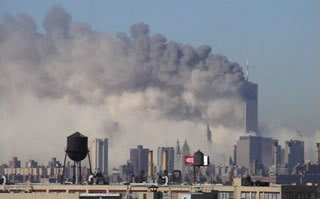
The view from Sunnyside, Queens
September 11, 2001
Why another 9/11 Web site? When I first started looking into this 9/11 stuff, I was quickly overwhelmed: loads of information, much of it shouted, sarcastic debunkers, angry rebuttals, wah! Overload! If it wasn't such an important story, I'd have just said the hell with it. But as a New Yorker who watched those towers fall, I can't seem to get it out of my head. Since I'm a Web site guy, I decided just to collect what evidence I could, organize it in some sensible way, and create the sort of site that I would want to use, where you can go through methodically, know what you've seen and haven't seen, find new stuff easily, and also get a sense from other people what they think of it all. It is certainly not the most comprehensive nor the most authoritative 9/11 site in the world, but I hope that, in its overall design and user-friendliness, it might help make these issues more accessible to more people and in that way add more than extra noise to the 9/11 landscape.
Bear in mind: I have tried to be as brief as possible while doing some justice to the topics. Everything done in one or two paragraphs here has been done extensively at great length and in far greater detail elsewhere. So don't take what you see here as the best defense of anything or the best explanation. Think of it more as an attempt at a brief summary, hopefully intriguing enough to get you to do further research. The Web is great but books are better. There's too much information to read on a computer screen all at once. Sit down with a good book in a receptive mood. I can recommend The New Pearl Harbor by David Ray Griffin as an excellent starting point. If the sarcastic "Debunking 9/11" crowd start to get to you, try Griffin's "Debunking 9/11 Debunking." That's your advanced homework. But do check out the debunkers. Give them an open mind too. Weigh it out for yourself.
Features
The site is really designed for the logged-in user, although it remains fully searchable and navigable for any visitor. By logging in you activate additional functionality: you can participate in discussions, rate how suspicious a piece of evidence is, and see summaries with quick links to any new evidence or comments you haven't seen yet. The suspiciousness rating is a four-star system:
| Key | Meaning |
|---|---|
 | Not very suspicious |
| Somewhat suspicious |
| Rather suspicious |
| Extremely suspicious |
Sources
I've basically relied on three books, a couple of DVDs, a lecture or two, and a bunch of Web sites.
Web sites: The Complete 9/11 Timeline is a deep resource, easy to get lost in, but then again easy to find your way back again. Pilots for 9/11 Truth is the place to go for professional pilots' views on whether the alleged hijackers could have done what they are supposed to have done, and for analysis of flight data recorder information; 911truth.org is a good general starting point; 911research.wtc7.net has good technical articles; and Architects and Engineers for 9/11 Truth is good for building collapse stuff. For 9/11 and sort of deeper background stuff, you could do far worse than Mike Ruppert's From The Wilderness site. There's millions of sites though. These'll get you going.
DVDs: There's 9/11 Blueprint for Truth: The Architecture of Destruction from Richard Gage, professional architect and founder of Architects and Engineers for 9/11 Truth, which has Mr. Gage's multimedia presentation at the University of Manitoba, a strongly persuasive case that the collapses of the twin towers and Building 7 were controlled demolitions. Pilots for 9/11 Truth has several interesting analytical DVDs about the various flights. They combine analysis of black box data with flight animations and witness testimonies to intriguing effect. The Truth Is In Your Hands is another one I picked up, a good overview that contains some of the best visual evidence I've seen for bombs at the WTC.
Books: There are quite a few books out now. I think David Ray Griffin is still the leading 9/11 author out there, although there are quite a few other good ones now as well. Griffin's books are all well reasoned, well written, and worth your time. You may not agree with every last point he makes -- I don't -- but that's fine. Be a critical reader. There's plenty of good stuff in there. Where I've cited simply 'Griffin' that's The New Pearl Harbor, his first book. Check out also Disconnecting the Dots by Kevin Fenton; The War on Truth by Nafeez Mosaddeq Ahmed; Towers of Deception by Barry Zwicker; Terror Timeline by Paul Thompson; 9/11 Mystery Plane by Mark Gaffney; The Road to 9/11: Wealth, Empire, and the Future of America by Peter Dale Scott. When I've cited 'Marrs', that's Jim Marrs' book The Terror Conspiracy. Mr. Marrs goes a few places I wouldn't go (e.g., his section on psychic evidence), but even so this is a useful and fairly comprehensive repository of mostly well-documented facts, plus some instructive historical background. Read the other side too, read the Popular Mechanics 9/11 Debunking book AND David Ray Griffin's Debunking 9/11 Debunking. Make up your own mind.